
What is this 'MCP' thing AI experts are talking about?
MCP (Model Context Protocol) is a groundbreaking standard that acts as a universal connector between AI systems and the tools/data they need to interact with.
Think of it as a "USB for AI" – a common interface that lets any AI model seamlessly access databases, apps, APIs, and other systems without custom coding.
What MCP Does
- Universal Tool Access: Allows AI to dynamically discover and use external resources like Google Drive, Slack, or coding environments through standardized connections
- Automatic Integration: AI agents automatically detect available tools via MCP servers – no manual coding required (e.g., new CRM system appears as available tool immediately
- Vendor Agnostic: Works with any AI model (Claude, GPT-4, open-source LLMs) and any service that implements MCP
Why It Matters for Business
- Reduces Integration Costs: Instead of building custom connections for each tool, companies use pre-built MCP servers (1,000+ available as of 2025)
- Enables Complex Workflows: AI can chain actions across multiple systems – email a client update spreadsheet create Jira ticket, all through MCP
- Future-Proofs AI Investments: Adopted by major tools like Replit, Codeium, and IDEs, MCP ensures AI capabilities grow as new tools join the ecosystem
Real-World Impact
Companies like Block (Square) use MCP to connect financial data systems, while design teams leverage it for AI-powered asset generation directly from Figma files[3][6]. This shifts AI from isolated chatbots to fully integrated business assistants that understand your specific tools and data context.
The protocol is particularly valuable for:
- Non-technical users: Claude Desktop app lets anyone use MCP-powered tools through natural language
- Cross-platform automation: Mix AI providers (Claude + open-source models) while maintaining tool integrations
- Rapid prototyping: Test workflows by asking AI to execute sequences in tools like Unity/Blender without manual setup
MCP represents a fundamental shift in AI architecture – rather than just improving model intelligence, it focuses on connecting that intelligence to the real-world systems where work actually happens.
For businesses, this means AI that truly understands your operations rather than existing in a vacuum.
Continue reading
More from AI New Zealand.
AI Operating System
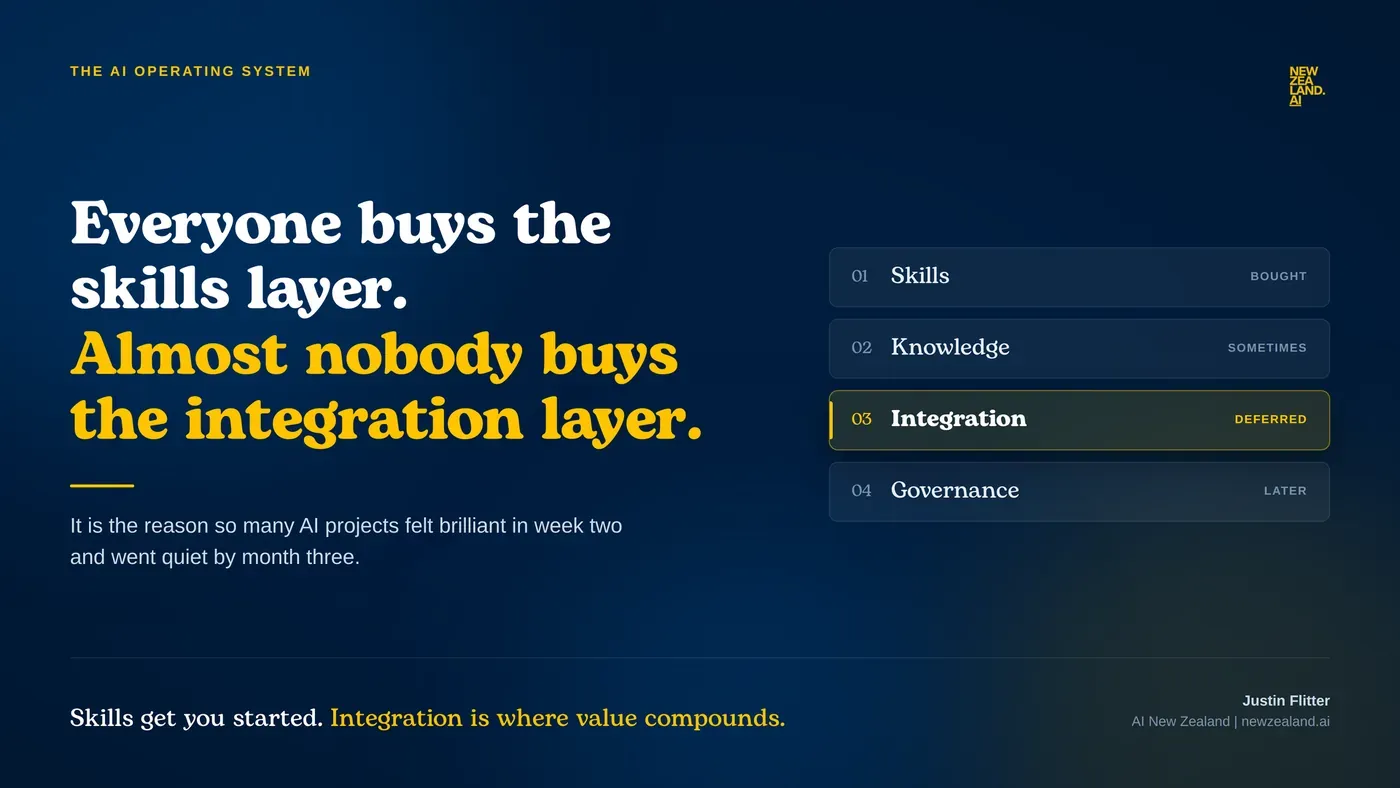
Everyone is buying the skills layer. Almost nobody is buying the integration layer.
Read article →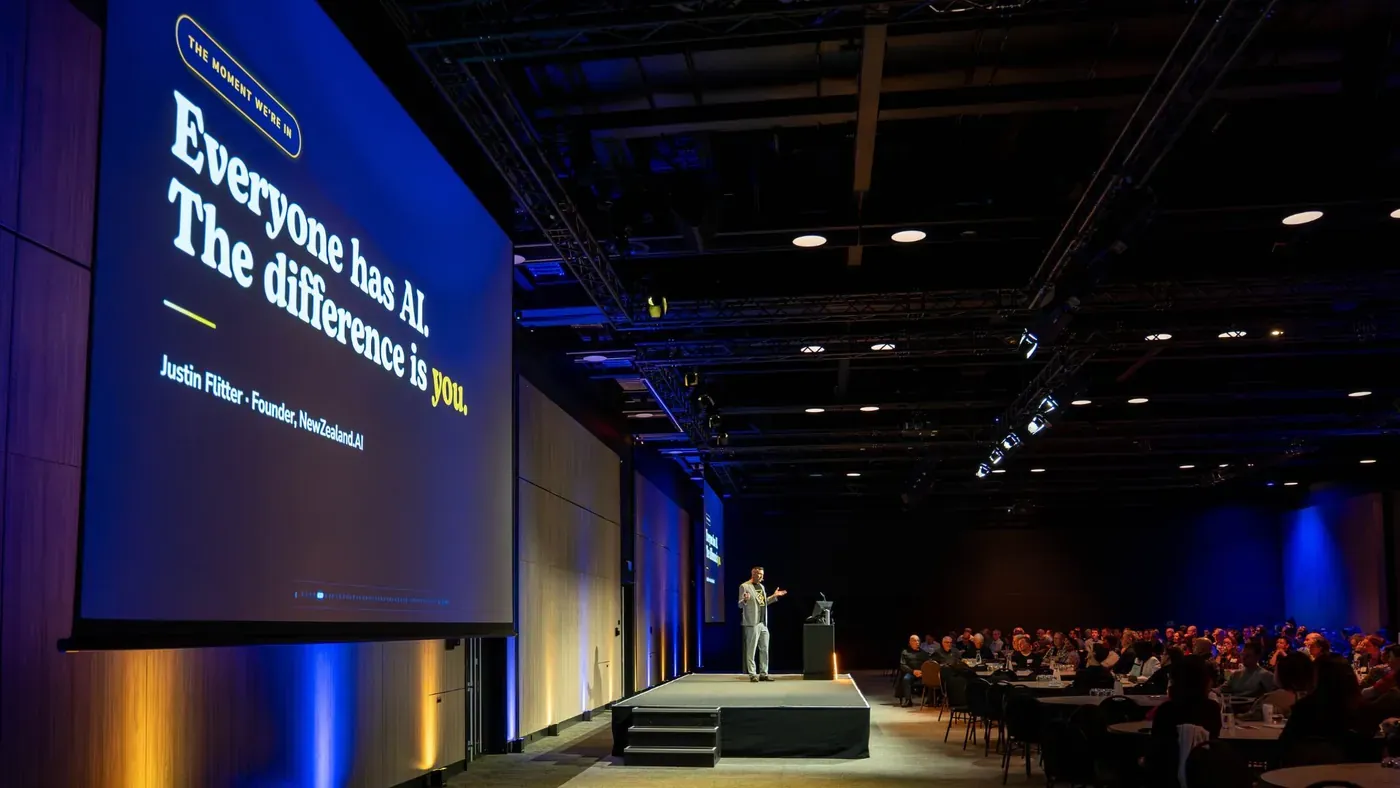
2026 AI Roadshow Notes
AI is no longer just about content generation. It is becoming operational infrastructure.
Read article →
Insights
What comes after LLMs now has a New Zealand face on it.
Read article →Power up your potential with practical AI skills.
Contact us to discuss how Artificial Intelligence could boost your business.