
Te Hiku Media's AI project
Around half of the world's roughly 7,000 languages are under threat, and Indigenous languages are vanishing at a rate of about one every two weeks.
When a language dies, communities lose not just words but worldviews, stories, ecological knowledge and identity, so the impact is social, cultural and economic.
Mori media organisation Te Hiku Media holds about 30 years of archival recordings, capturing kaumtua (elders) speaking te reo Mori and passing down knowledge, tikanga and histories.
The project's core idea was to build an AI system that could automatically transcribe this treasure trove of audio, turning fragile recordings into searchable, usable language data at scale.
To make this real, Te Hiku ran a reading competition for native speakers, collecting labelled phonetic data to train speech recognition models tailored specifically to te reo Mori.
The resulting system reportedly outperforms large global tech models on Mori, showing that a focused, community-led dataset can beat generic "big AI" on what matters locally.
Why this is a landmark achievement
First, it reframes AI as a guardian of cultural memory, not just an efficiency tool. By rapidly transcribing and structuring decades of recordings, Te Hiku is preserving language, oratory style, idioms and stories that could otherwise be lost within a generation.
This creates a living resource for teachers, learners, researchers and whnau, strengthening intergenerational transmission of Te Reo Mori.
Second, it proves that responsible, sovereignty-first AI is not a "nice to have" constraint, but a catalyst for better outcomes. Te Hiku has been vocal about Indigenous data sovereignty, ensuring that Mori communities retain control over their language data, rather than handing it to large external platforms with misaligned incentives.
By aligning technology with tikanga and community values, they've built a system that is both technically strong and socially legitimate.
A model for AI projects everywhere
For New Zealand businesses and public sector leaders, this story is a blueprint for what "good AI" looks like. It starts with a meaningful problem grounded in people and purpose, combines high-quality local data with modern machine learning, and wraps everything in strong governance and ethics.
It also demonstrates that relatively small, focused organisations can out-innovate global tech companies in specialised domains when they own the data, the context and the trust.
At a global level, Te Hiku's work shows a scalable path for thousands of other at-risk languages: community-led data collection, tailored AI models, and governance that keeps benefits with those who contribute.
In an era where many worry that AI will homogenise culture, this project is proof that, done right, AI can actually deepen diversity and help languages – and the identities they carry – not just survive, but thrive.
Continue reading
More from AI New Zealand.
AI Operating System
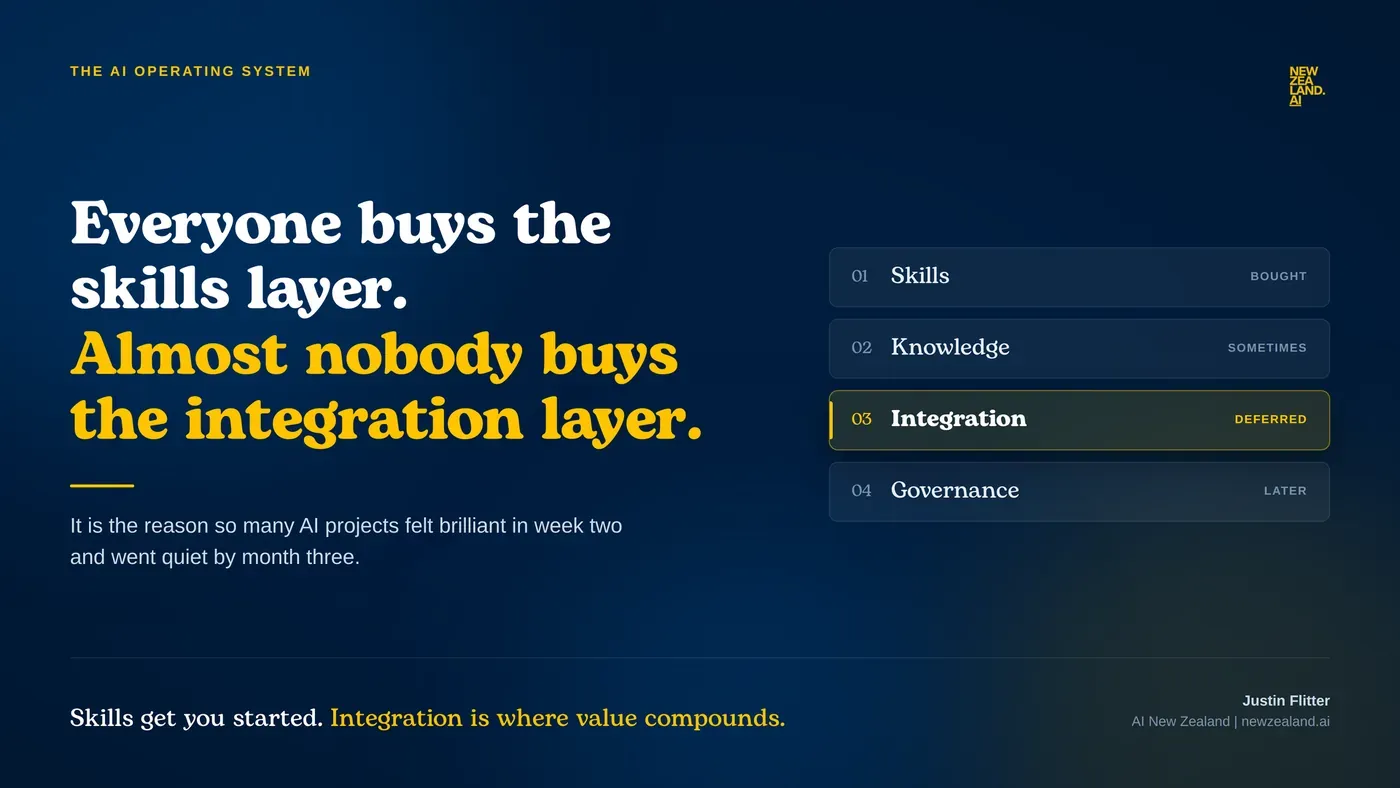
Everyone is buying the skills layer. Almost nobody is buying the integration layer.
Read article →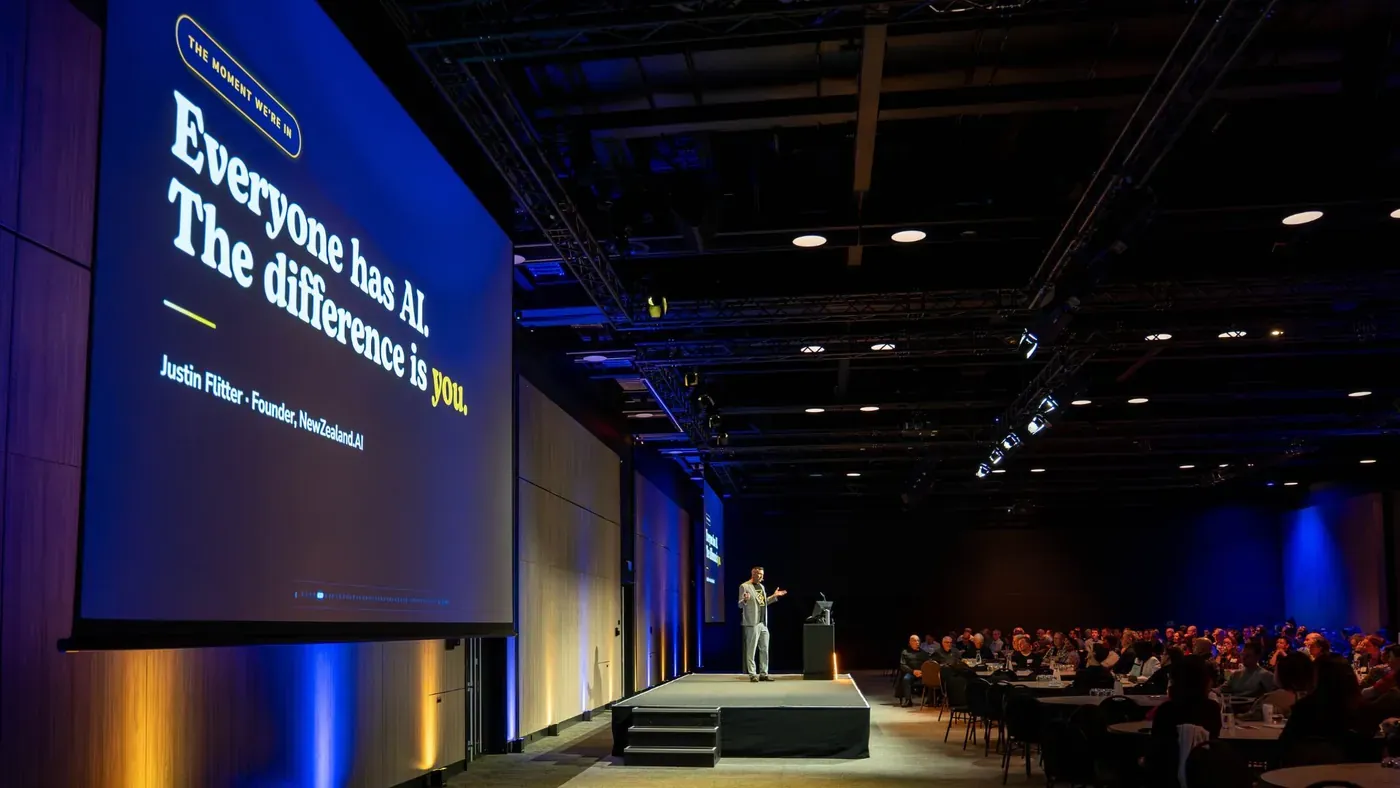
2026 AI Roadshow Notes
AI is no longer just about content generation. It is becoming operational infrastructure.
Read article →
Insights
What comes after LLMs now has a New Zealand face on it.
Read article →Power up your potential with practical AI skills.
Contact us to discuss how Artificial Intelligence could boost your business.