
The mindset shift for graphic designers in the AI era.
Graphic designers used to be craftspeople, paid for their time, their hands, and their ability to execute brand briefs pixel by pixel.
But now, as AI systems become more capable at producing images, layouts, and even full campaign suites, the old "sweat-of-the-brow" value exchange is getting obsolete.
AI powers the shift from production to orchestration
AI can now be trained on specific brand aesthetics, tone, and even emotional flavour, making it capable of instantly generating dozens or thousands of visual assets at scale.
The who and what of the brief become training data. The AI becomes the producer or renderer. It still needs the right instructions, of course.
The emerging role for designers: contextual intelligence and narrative leadership
Designers will increasingly be valued less for routine output and more for their ability to:
- Understand brand purpose, audience psychology, and context;
- Translate the messy, human bits, values, quirks, cultural nuance, into clear, structured frameworks for AI;
- Construct strategic prompts (or schema) that encode the brand's essence into something an AI can reliably generate at scale;
- Act as curators, editors, and narrative directors, ensuring that automated output aligns with evolving strategy and resonates emotionally.
Prompts as new creative currency
The ability to encode not just visual specifications but also brand story and context into a prompt becomes the designer's new superpower. Designers become prompt & context engineers, creative strategists, and pattern recognisers.
Their job is to architect the system and tastefully calibrate the AI's creative levers.
Partnering with AI enables new scale, but it needs strategic stewardship
AI will do the heavy lifting, but the core creative impulse, the empathy, the narrative vision, the alignment with brand DNA remains utterly human.
Designers who can direct and audit the work at a systems level will be in high demand, orchestrating the tools for authenticity and consistency across touchpoints.
Instead, the new way of working for designers could be:
- Understand the strategic objectives of the business: its values, culture, and what makes the brand story unique.
- Understand the people: customers, employees, partners, what motivates and engages them, what resonates and feels relevant.
- Understand the campaign brief, purpose, audience, objectives, CTA, key messages
- Bring these insights to life authentically, using visual and design elements (including video).
- With AI automating production, designers now create the design schema and feed all contextual understanding into AI systems.
- The designer's role is to develop creative ideas and define the essence, style, and storytelling elements, not to produce every social post or image themselves.
- By partnering with AI, designers scale authenticity, automating content production for any scenario or use case, while staying focused on crafting the core narrative and visual direction.
How does that manifest in a new AI workflow?
1 - The contextual understanding that influences your designs are important data points and references. That knowledge should be used to create a master prompt.
2 - The design schema, images size, logos, hero images, colours, products, people, shapes, layout, tone, key messages, CTA. That information is used to create a system prompt for each different type of content.
Combined - those two pieces of information create a prompt for a CustomGPT or AI Agent to automate the production of content for each content type. (Blog posts, social media tiles, adverts, document templates, etc.
This might not be the perfect scenario. But I hope it triggers some critical thinking into how you might work differently, a new approach that brings a competitive advantage.
Continue reading
More from AI New Zealand.
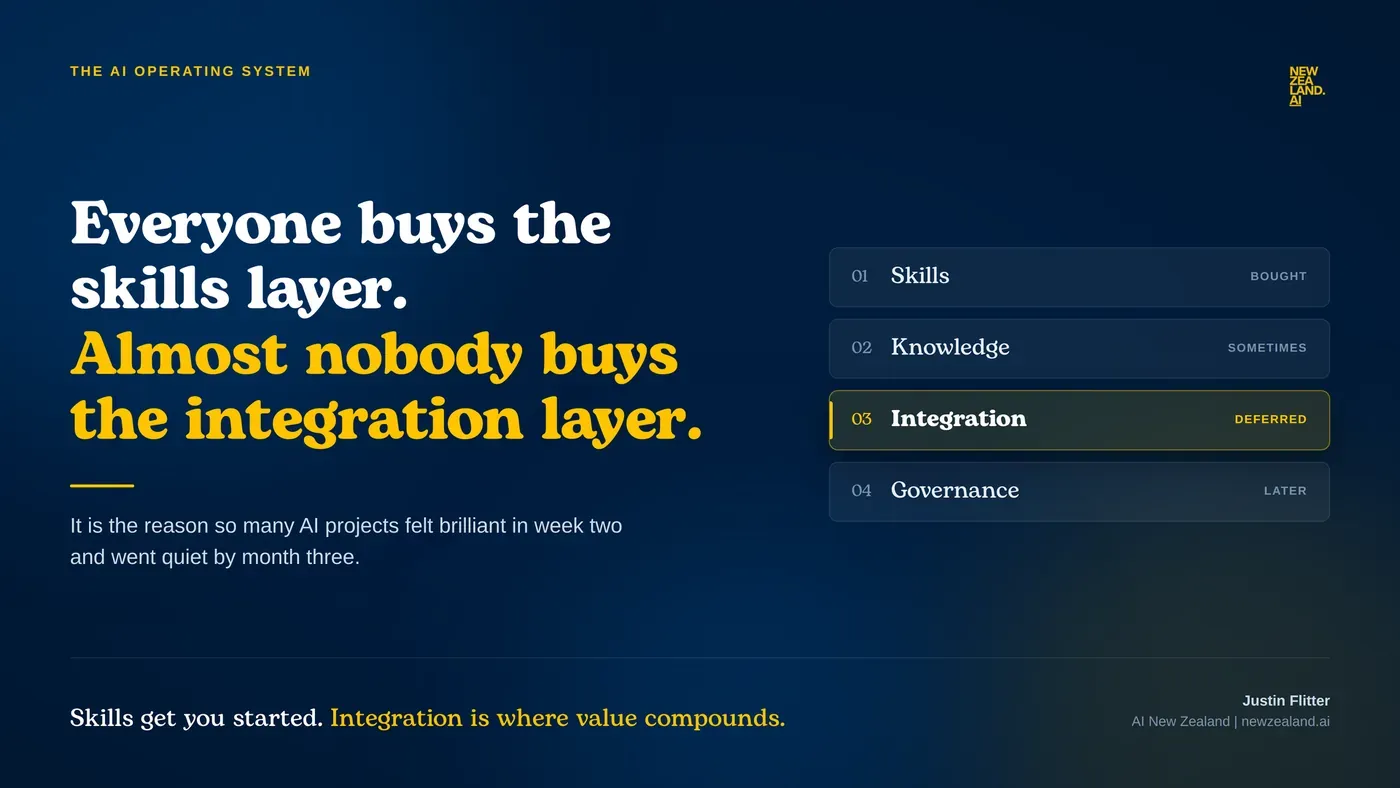
AI Operating System
Everyone is buying the skills layer. Almost nobody is buying the integration layer.
Read article →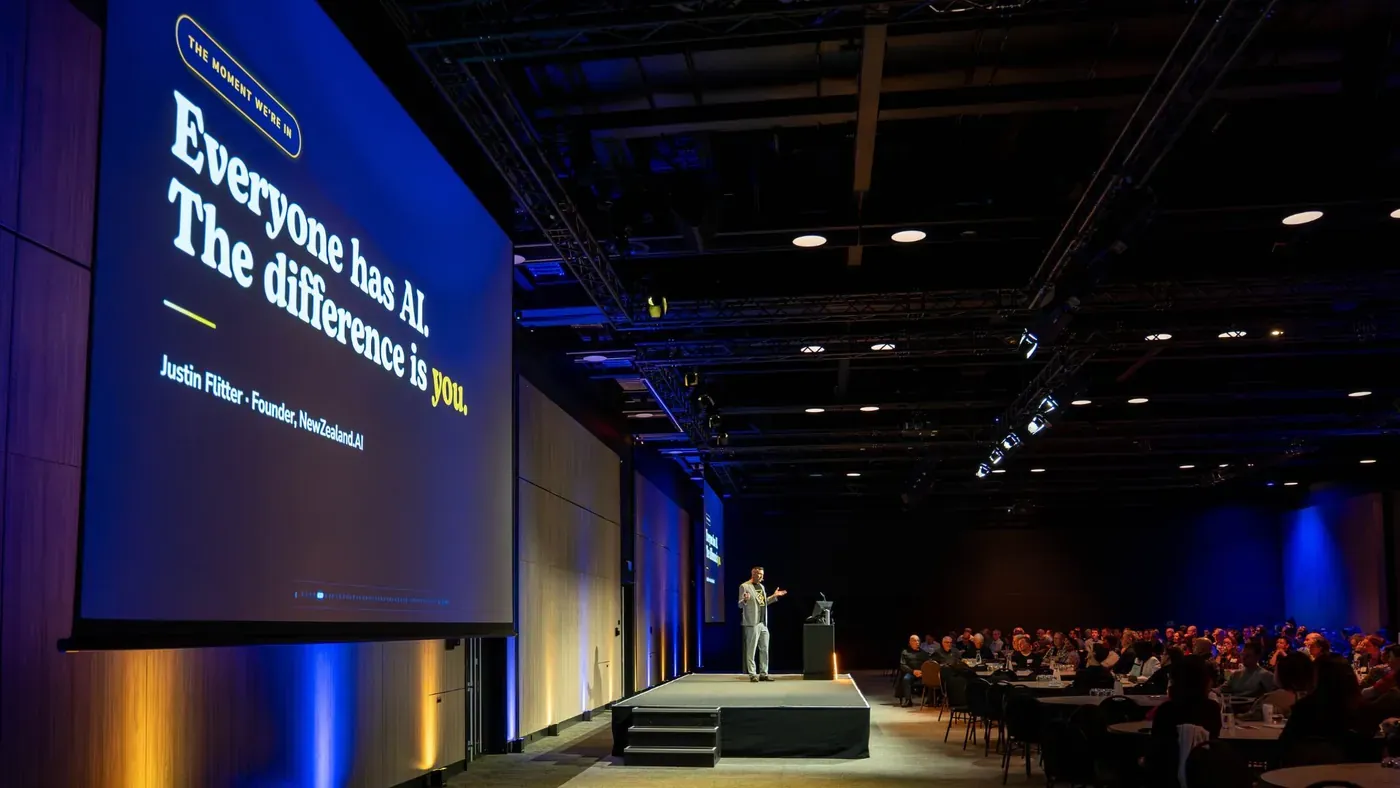
2026 AI Roadshow Notes
AI is no longer just about content generation. It is becoming operational infrastructure.
Read article →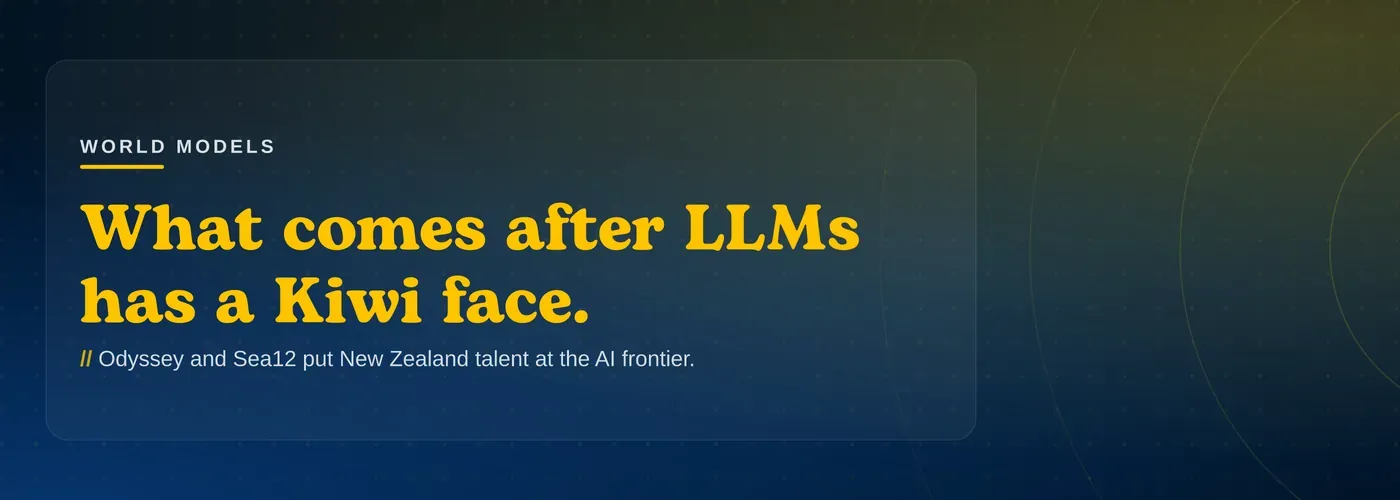
Insights
What comes after LLMs now has a New Zealand face on it.
Read article →Power up your potential with practical AI skills.
Contact us to discuss how Artificial Intelligence could boost your business.