
1. The gap is not adoption. It is the operating model.
We are partway through the Great New Zealand AI Roadshow, and the rooms have been full, honest, and a little uncomfortable in the best way.
Nine sessions a day. Founders, lawyers, security leaders, mentors and marketers, all on one stage, all pointed at the same question: where are Kiwi businesses actually at with AI, not where the vendor decks say we should be?
Here is what the rooms have taught us so far.
New Zealand punches above its weight on AI. Claude usage here in 2025 ran roughly four times the global per-capita average. Seventy-eight percent of businesses have touched the tools.
But only twelve percent have moved from experimentation to genuine strategic integration.
That gap has a name. AI theatre. Better screenshots, same bottlenecks. The promise of transformation without the operating change underneath it.
Asa Cox from Pneuma put hard numbers behind the same idea. After running adoption work with more than 100 NZ businesses, his read is that the technology can already do about 95 percent of what most businesses want. The remaining gap is human: culture, change, communication, training. Globally, around 70 percent of AI projects still fail, and almost none of them fail on the technology.
The honest takeaway: you do not need to wait for better models. You need to build the capability that lets your team absorb what already exists.
2. Your data is not leaking. It is being handed over.
Raymond Schippers from Check Point flipped the security story on its head. The old threat model assumed attackers were trying to take your data. The new reality is that your best people are quietly giving it away, in exchange for being a bit faster.
Seventy-eight percent of organisations are using AI. Forty-seven percent of them have no AI-specific security control in place at all.
Anchali Anandanayagam from Hudson Gavin Martin made the legal version of the point. When Air Canada's chatbot invented a refund policy, the airline argued the bot was a separate legal entity. The court said no. You own what your AI says.
Raymond's sharpest line is the one for every executive: prompts are not controls. Telling an agent not to delete the database is like asking a teenager to clean their room. It might work. It might not. Real controls are technical: least privilege, human review on high-risk actions, rollback. Not instructions.
3. Train your AI to fight you.
AI is trained to be a lap dog. You give it a half-baked idea, it hands back a five-star rating. Steve Ballantyne nailed it on the Auckland stage: a junior analyst with a lot of confidence and not enough context, telling you exactly what you want to hear.
That is why strategy decks are starting to sound the same.
His fix is the one we keep coming back to. Build a custom GPT and instruct it to be contrarian on purpose. Challenge every premise. Steelman the opposite position. Surface what you are avoiding. Run your next board paper through it before you ship, and keep only what survives the fight.
AI commoditises answers. Critical thinking is your competitive moat. Human judgement becomes premium.
4. Do not automate a broken workflow.
Richard Kenyon from Datacom drew the line that most businesses miss. Adoption is using AI to do today's work faster. Adaptation is redesigning the work itself.
Most of the value lives in adaptation. Most of the effort goes into adoption, bolting AI onto workflows that were designed around legacy tech and legacy assumptions.
AI does not fix a broken process. It accelerates it. So the strategy question is not which tool. It is how you want the business to sense, think, decide and act when AI is in the loop.
5. The price of creativity has collapsed.
After a day of governance and risk, Steve Ballantyne reminded the room that AI is also one of the most powerful creative tools ever built, and most organisations only use it for efficiency.
Brand mascots that used to need a Disney budget. A piping company shipping a Springsteen-style brand anthem from a folder of old photos. A full concept ad built end to end in 90 minutes, the kind of work that used to be a $20k to $50k cheque before production even started.
The barrier to creative expression has basically disappeared. Most businesses do not have a shortage of ideas. They have a shortage of bandwidth to test them. AI fixes that.
The thread that runs through all of it
One person being great at prompting is not a strategy.
The businesses pulling ahead are not using better AI. They are feeding it better context, and they are encoding that context once: methodology, brand voice and workflows, connected to real systems, used by everyone, improving every month.
That is not an adoption problem. It is an operating model problem. And the rooms on this roadshow are full of people who have just worked that out.
The tools are ready. The question is whether you are.
If you want help figuring out where AI will actually move the needle in your business, come find us at newzealand.ai.
Continue reading
More from AI New Zealand.
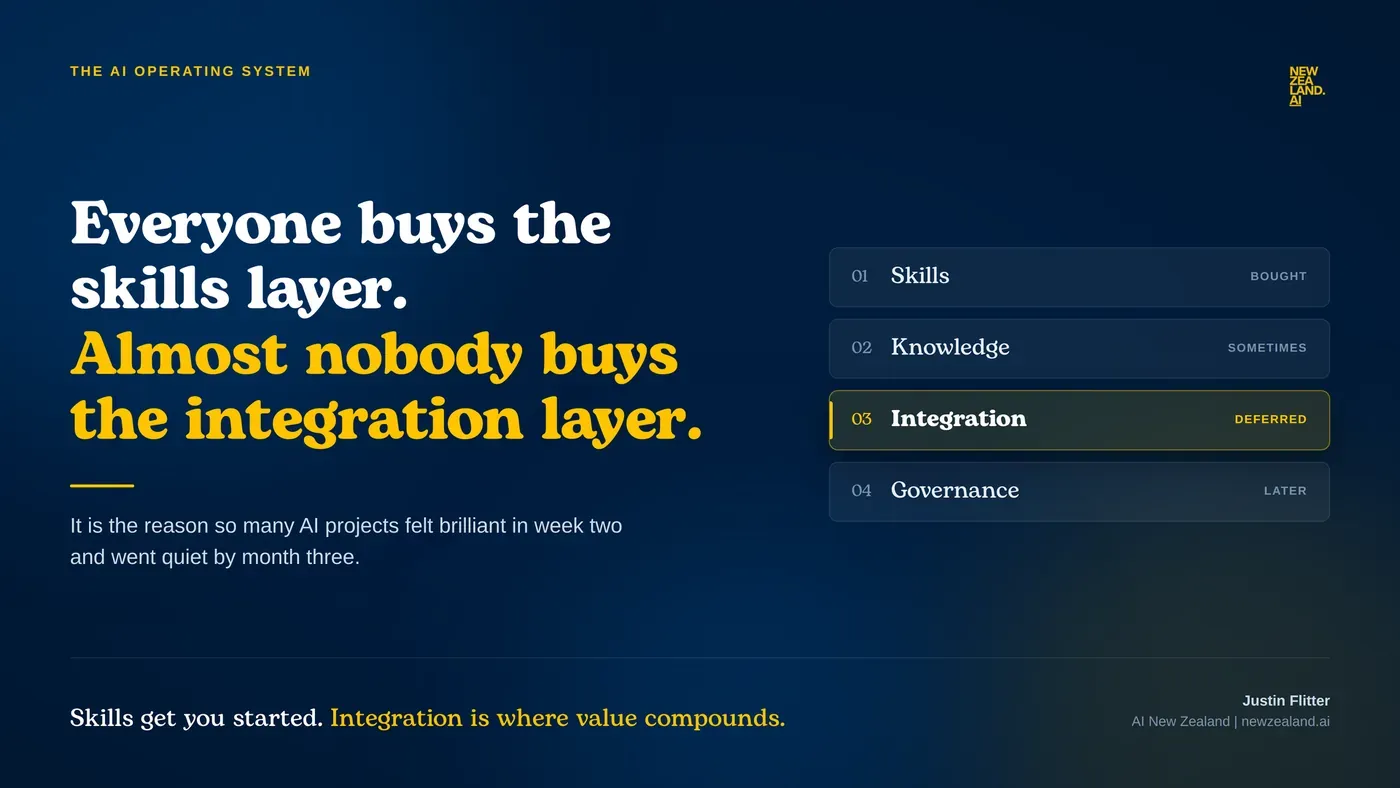
AI Operating System
Everyone is buying the skills layer. Almost nobody is buying the integration layer.
Read article →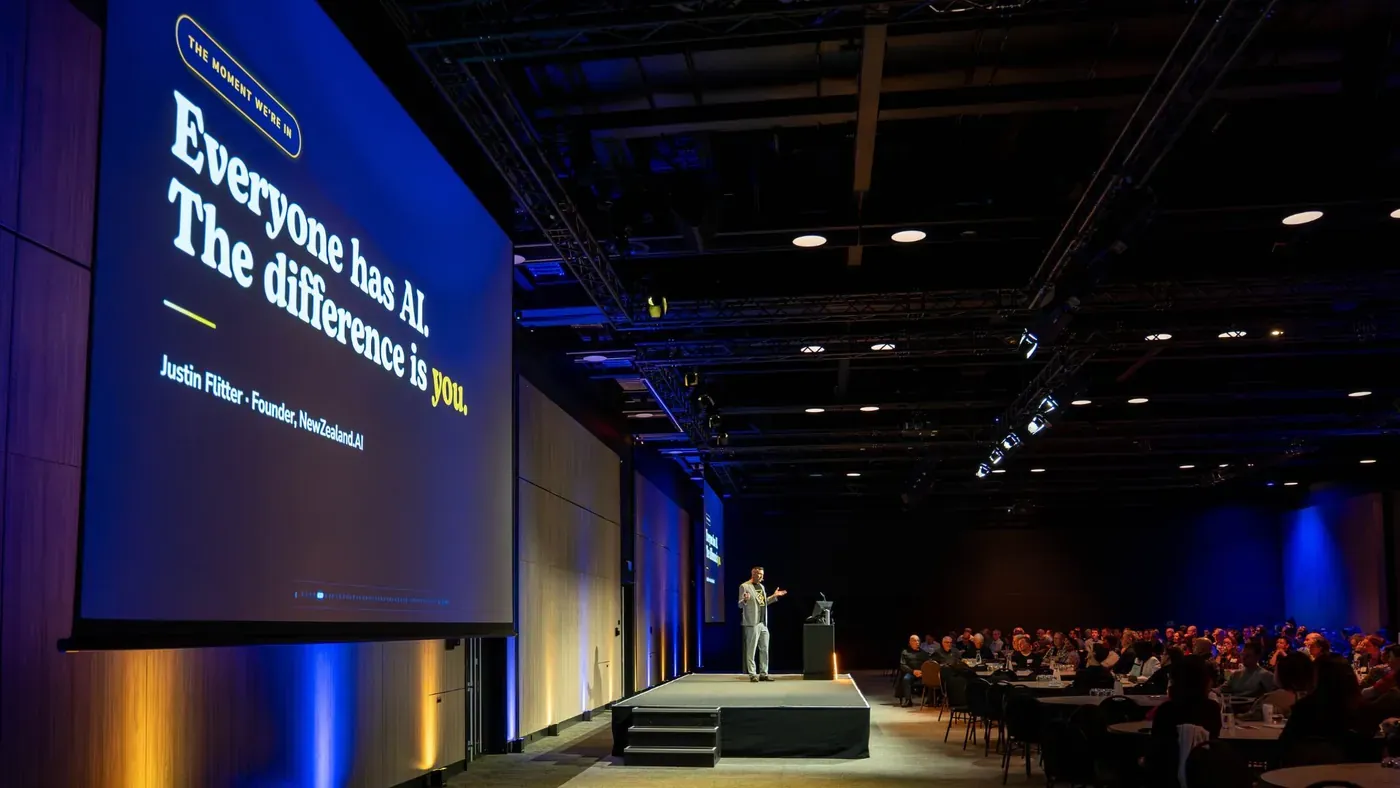
2026 AI Roadshow Notes
AI is no longer just about content generation. It is becoming operational infrastructure.
Read article →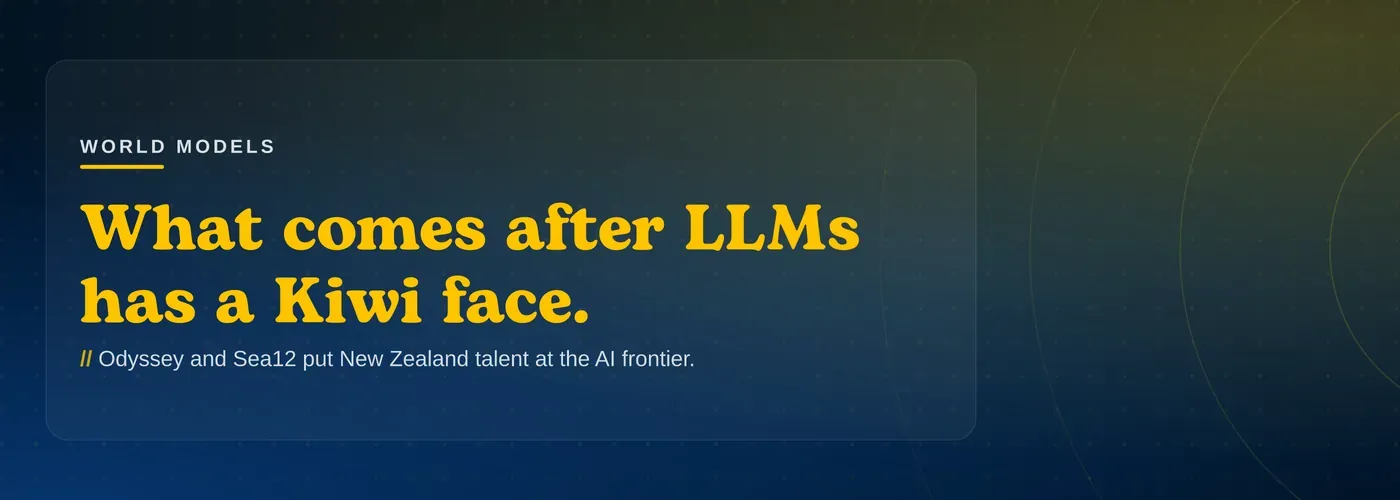
Insights
What comes after LLMs now has a New Zealand face on it.
Read article →Power up your potential with practical AI skills.
Contact us to discuss how Artificial Intelligence could boost your business.